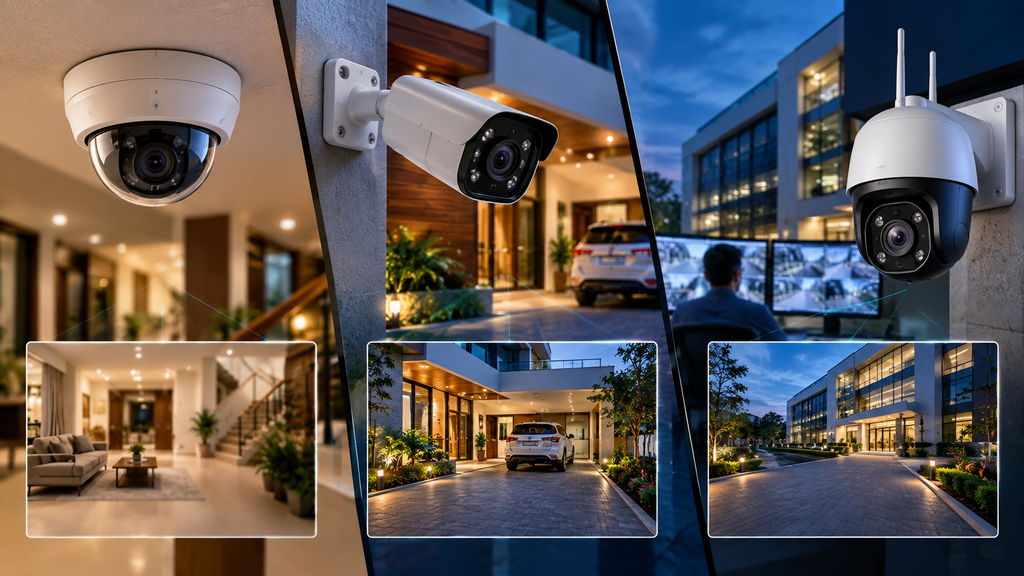
In today’s evolving market, customers are not just looking for products; they are looking for the right solutions to their specific needs.
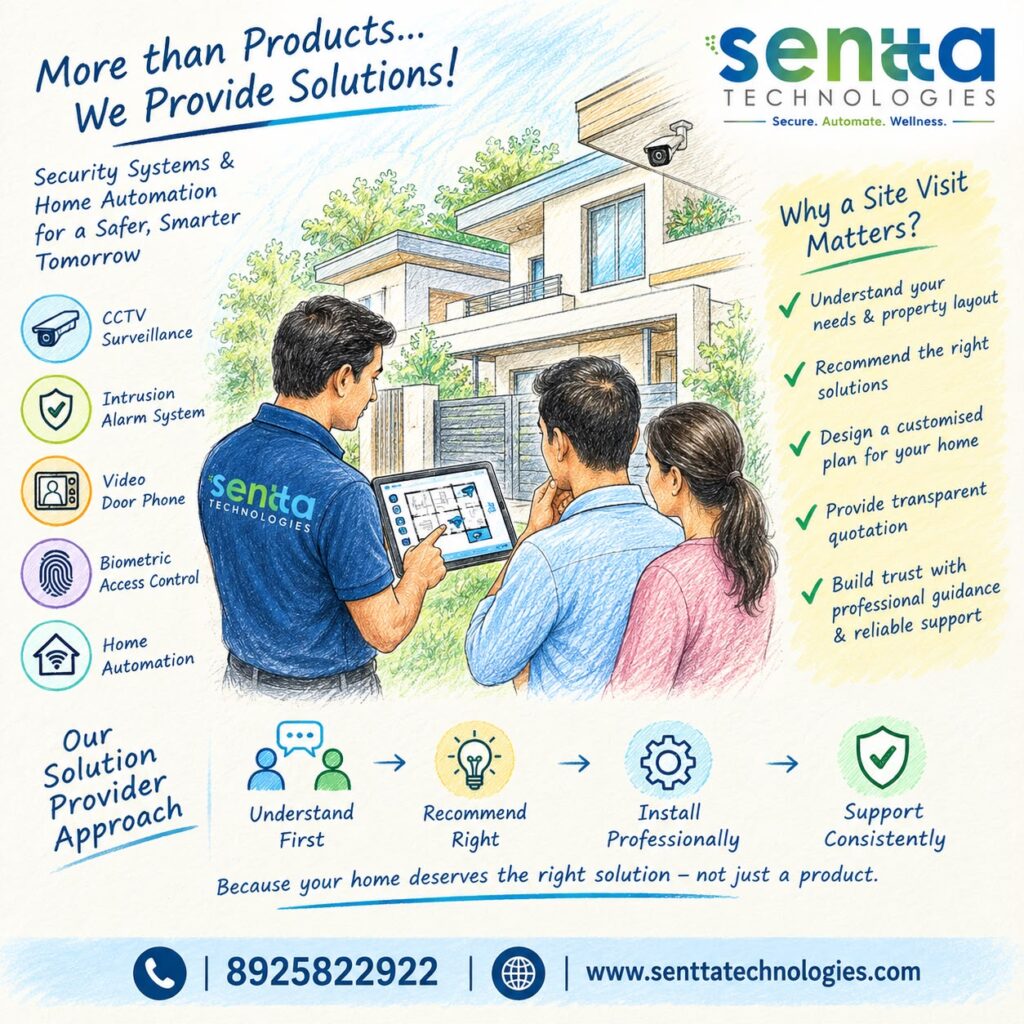
In the B2C channel, a site visit plays a vital role in understanding customer expectations and delivering customised solutions for homes, villas, and apartments.
📍 Why is a Site Visit Important?
✅ Understand Customer Needs: Assess the property layout, security concerns, lifestyle, and specific requirements.
✅ Recommend the Right Solutions: Suggest suitable CCTV cameras, intrusion alarm systems, video door phones, biometric access control, and smart home automation solutions.
✅ Customised Solution Design: Identify camera locations, entry and exit points, wiring requirements, network connectivity, and automation opportunities.
✅ Transparent Quotation: Offer the right combination of products, installation, and service based on the customer’s requirements and budget.
✅ Build Trust & Long-Term Relationships: Demonstrate technical expertise, provide professional guidance, and ensure dependable after-sales support.
🎯 The Solution Provider’s Approach
A successful solution provider does not simply ask, “Which product would you like to buy?”
Instead, the right questions are:
🔹 What are you trying to protect? 🔹 What challenges are you facing? 🔹 How can technology make your home safer, smarter, and more comfortable? 🔹 What is the most practical and cost-effective solution for you?
At Sentta Technologies, we believe that every site visit is an opportunity to understand, advise, design, and deliver a solution that creates genuine customer value.
Our philosophy: Understand first. Recommend right. Install professionally. Support consistently.
Because customer satisfaction begins with the right solution—not merely the right product.
Meta Title: Curtain Automation for Apartments in Chennai | Sentta Technologies
Meta Description: Discover the benefits of curtain automation for apartments in Chennai. Enjoy smart curtains, remote control, voice commands, and seamless home automation with Sentta Technologies.
Primary Keyword: Curtain automation for apartments
Secondary Keywords: Smart curtains in Chennai, automatic curtains, motorized curtains, home automation in Chennai, smart home solutions, automated curtain systems, apartment home automation.
Introduction
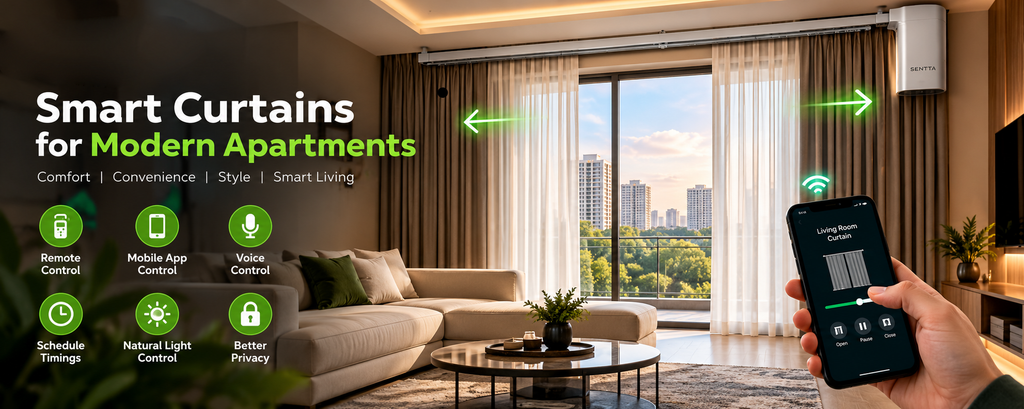
Modern apartments are becoming smarter, more comfortable, and more convenient with the growing popularity of home automation. From smart lighting to automated security systems, technology is transforming the way people manage their homes. One increasingly popular feature is curtain automation for apartments, which allows residents to open and close their curtains effortlessly using a remote, smartphone, or compatible voice assistant.
Whether you live in a compact apartment, a luxury flat, or a high-rise residential property, automated curtains can enhance convenience, privacy, and the overall living experience.
At Sentta Technologies, we help homeowners explore smart home automation solutions designed to make everyday living simpler and more comfortable. In this guide, we explain how curtain automation works, its benefits, and what to consider before installing it in your apartment in Chennai.
What Is Curtain Automation?
Curtain automation is a smart home technology that uses a motorized mechanism to open and close curtains without requiring manual operation.
Instead of pulling curtains by hand, you can control them using a remote control, a smartphone app, or compatible smart home devices. Depending on the system, you can also schedule curtains to open or close automatically at specific times.
For example, you can schedule your bedroom curtains to open in the morning and close in the evening, or close your living room curtains when you want more privacy.
Automated curtain systems are suitable for bedrooms, living rooms, home theatres, balconies, and apartments with large windows.
How Does Smart Curtain Automation Work?
A typical automated curtain system consists of a motor, curtain track, control unit, and power supply. Depending on the model, the system may also support Wi-Fi, Bluetooth, or integration with a compatible home automation platform.
Here is how it works:
Motorized curtain track: A motor moves the curtains along a compatible track.
Control system: A remote, wall switch, or smartphone app sends the command.
Automated movement: The curtains open or close according to your instructions.
Smart scheduling: Supported systems allow you to set opening and closing schedules.
Smart home integration: Compatible systems may connect with voice assistants or other home automation devices.
The exact features depend on the curtain motor, controller, and smart home platform selected.
7 Benefits of Curtain Automation for Apartments
1. Convenient Everyday Operation
Opening and closing curtains manually can become inconvenient, especially when windows are large or difficult to reach. Automated curtains make everyday operation easier with simple remote or app-based controls.
You can manage your curtains without walking to each window, making them particularly useful for larger apartments and homes with multiple windows.
2. Better Privacy
Privacy is important in apartments, particularly in high-rise buildings and residential communities where neighbouring buildings may overlook your windows.
With automated curtains, you can close your curtains whenever needed using a remote or compatible smart device. Some systems also allow scheduled operation, helping you manage privacy throughout the day.
3. Improved Natural Light Control
Natural light can make your apartment feel brighter and more welcoming. However, excessive sunlight may cause glare on television screens, computer monitors, or workspaces.
Automated curtains allow you to adjust incoming daylight more conveniently throughout the day. With compatible scheduling features, you can also coordinate curtain movement with your daily routine.
4. Enhanced Comfort for Bedrooms
Automated curtains can make your morning and nighttime routines more comfortable.
You can schedule curtains to open in the morning to let in natural light and close in the evening for privacy. This can be especially useful for bedrooms where convenience and light control are important.
5. A Modern and Premium Interior
Motorized curtains complement contemporary apartment interiors, including minimalist homes, luxury flats, and modern living spaces.
When selected to match your interior design, a motorized curtain track can provide a neat, convenient solution without changing the overall appearance of your curtains.
6. Integration With Other Smart Home Devices
Curtain automation can be part of a wider home automation system.
Depending on compatibility, your curtains may work alongside smart lighting, air conditioning controls, and other connected devices. For example, you may configure a suitable smart home scene to close the curtains and adjust the lighting when you start watching a movie.
Integration options should be confirmed before choosing the equipment.
7. Convenient Control When You Are Away
Some connected curtain systems allow you to operate curtains through a smartphone app, including when you are away from home, provided the system supports remote access and has the required connectivity.
This can help you manage your home environment without physically operating the curtains.
Types of Automated Curtain Systems for Apartments
Choosing the right system depends on your window size, curtain style, budget, and desired level of automation.
Remote-Controlled Curtains
These systems use a dedicated remote to open and close curtains. They are a practical option for homeowners who want motorized convenience without extensive smart home integration.
Best for: Bedrooms, living rooms, and individual windows.
App-Controlled Smart Curtains
These systems allow you to operate compatible curtain motors using a smartphone app. Depending on the model, they may support schedules and remote operation.
Best for: Homeowners who prefer smartphone-based control.
Voice-Controlled Curtains
Compatible systems can integrate with supported voice assistants, allowing you to operate curtains using voice commands.
Best for: Residents who already use compatible smart home devices.
Scheduled Curtain Automation
Certain systems allow you to create schedules so that curtains open or close at predefined times.
Best for: Bedrooms, living rooms, and apartments where daily routines are predictable.
Integrated Home Automation Curtains
These systems connect curtain motors with a broader home automation platform. Depending on the configuration, they can work with other smart devices and predefined scenes.
Best for: New apartments, premium residences, and homeowners planning a complete smart home.
How Much Does Curtain Automation Cost in Chennai?
The cost of curtain automation in Chennai depends on several factors. There is no single price that applies to every apartment because the installation requirements can vary considerably.
Important cost factors include:
Window dimensions: Larger windows may require longer tracks and more suitable motors.
Curtain weight: Heavy curtains may need motors with greater load capacity.
Motor type: Different motors offer different control methods and features.
Smart connectivity: Wi-Fi, app control, voice integration, and automation hubs can affect the total cost.
Number of windows: Automating multiple windows increases the overall project cost.
Installation requirements: Electrical work, track installation, and modifications to existing curtains may add to the expense.
For an accurate estimate, assess the number of windows, curtain dimensions, existing tracks, power availability, and preferred control options.
Contact Sentta Technologies to discuss your apartment requirements and explore a suitable curtain automation solution.
Can You Install Curtain Automation in an Existing Apartment?
Yes. Curtain automation can often be installed in an existing apartment, depending on the available space, curtain arrangement, track condition, and power requirements.
Before installation, consider the following:
Check the existing curtain track: Some tracks may be suitable for motorization, while others may need replacement.
Measure your windows: Accurate measurements help determine the appropriate track and motor.
Check power availability: The installer should confirm the required power connection and cable routing.
Choose your preferred control method: Decide whether you need remote control, smartphone operation, scheduling, or voice integration.
Plan the installation: Consider the ceiling, curtain box, window frame, and interior design before selecting the system.
If you are renovating your apartment or moving into a new flat, planning curtain automation early can make installation and wiring easier.
Curtain Automation for Apartments in Chennai
Chennai has a growing range of modern apartments, gated communities, and premium residential developments. In these homes, smart home features can help improve everyday convenience and control over the indoor environment.
Curtain automation can be particularly useful for:
Apartments with large living room windows.
Bedrooms where privacy and light control are important.
Homes with tall windows or difficult-to-reach curtains.
Premium apartments with integrated smart lighting.
Homeowners looking to introduce smart home features gradually.
When selecting an automated curtain system, consider your interior design, the local installation requirements, the weight of your curtains, and compatibility with any existing smart home equipment.
Sentta Technologies provides smart home automation solutions for residential spaces. Contact our team to discuss your requirements and determine which automation options are suitable for your apartment.
Frequently Asked Questions (FAQs)
1. What is curtain automation for apartments?
Curtain automation uses a motorized mechanism to open and close curtains through a remote, smartphone app, compatible voice assistant, or scheduled commands.
2. Can I automate the curtains in my existing apartment?
Yes, many existing apartments can accommodate curtain automation. Suitability depends on the curtain track, window dimensions, available space, motor requirements, and power supply.
3. Can I control automated curtains using my mobile phone?
Yes, systems with compatible smartphone connectivity can be controlled through an app. Remote access when you are away from home depends on the specific system and its connectivity requirements.
4. Do automated curtains work with Alexa or Google Home?
Some systems support Alexa, Google Home, or other compatible voice assistants. Always verify compatibility between the curtain motor, controller, and chosen smart home platform before purchasing.
5. Do automated curtains require a separate power connection?
Many motorized curtain systems require an electrical connection, while some models use rechargeable or battery-powered motors. Requirements vary by product.
6. Are smart curtains suitable for small apartments?
Yes. Smart curtains can be useful in small apartments as well as larger homes. The right system depends on window size, curtain weight, available installation space, and budget.
7. Can curtain automation be connected to other home automation devices?
Yes, compatible systems can be integrated with selected smart home devices and automation scenes. The available integrations depend on the equipment and platform used.
8. How do I choose the right curtain automation system?
Consider your window dimensions, curtain weight, control preferences, power availability, budget, and smart home compatibility. A professional assessment can help you select an appropriate system.
Conclusion
Curtain automation is a practical way to make apartment living more convenient, comfortable, and modern. From remote-controlled curtains to scheduled operation and compatible smart home integration, the right system can simplify everyday routines while giving you greater control over natural light and privacy.
Whether you are upgrading an existing apartment or planning a smart home for a new property, choosing a system that suits your curtains, windows, and lifestyle is essential.
Make your apartment smarter with Sentta Technologies.
Explore smart home automation solutions for your residential space and contact Sentta Technologies to discuss curtain automation, installation requirements, and compatible smart home options.
Call to Action: Contact Sentta Technologies today to explore smart curtain automation solutions for your apartment in Chennai.
Suggested Internal Links
Add these links naturally within the blog if the corresponding pages are available on the Sentta Technologies website:
Home Automation in Chennai — link to your home automation service page.
Smart Lighting Solutions — link to your smart lighting service page.
Gate Automation — link to your gate automation service page.
Contact Sentta Technologies — link to your contact page.
Recommended Featured Image
Image concept: A premium modern Chennai apartment living room featuring floor-to-ceiling windows, elegant motorized curtains, warm natural daylight, and a homeowner controlling the curtains through a smartphone.
Home automation is becoming increasingly popular among homeowners who want better convenience, security, and control over their living spaces. From controlling lights with a smartphone to operating automated gates and monitoring security cameras remotely, smart technology can make everyday activities easier.
One of the most common questions homeowners ask before investing in smart technology is: How much does home automation cost?
The answer depends on the size of your home, the devices you want to automate, the technology you choose, and the complexity of installation.
In India, a basic smart home setup may cost a few thousand rupees for selected devices, while a professionally installed system covering multiple rooms and several automation features can cost ₹50,000 to several lakhs or more.
In this guide, we explain the factors that affect home automation prices, the different features available, and how you can plan a smart home according to your budget.
How Much Does Home Automation Cost in India?
The cost of a home automation system varies depending on the number of devices, the selected features, and the installation requirements.
The following table provides indicative budget ranges, not fixed quotations. Actual prices depend on the products selected and the installation scope.
Home automation type
Estimated cost
Basic smart lighting or selected devices
₹5,000–₹20,000
Small smart home setup
₹15,000–₹50,000
1 BHK home automation
₹25,000–₹60,000
2 BHK home automation
₹45,000–₹1,00,000
3 BHK home automation
₹75,000–₹1,50,000
Premium villa automation
₹1,50,000 onwards
These are broad planning estimates for the Indian market. Packages may exclude civil work, electrical modifications, taxes, premium equipment, or additional installation charges. Not every package includes the same features.
A small setup controlling a few lights may be affordable, whereas a complete smart home with automated curtains, advanced lighting, climate control, digital locks, CCTV cameras, and gate automation will require a larger investment.
What Factors Affect Home Automation Cost?
Several factors determine the final price of a smart home automation system.
1. Size of the Property
The size and layout of your property can influence the number of switches, sensors, controllers, and other devices required.
A compact apartment may need only a few smart switches and basic controls. A larger villa may require multiple control panels, more sensors, automated curtains, and additional networking equipment.
However, property size alone does not determine the price. The number of devices and functions you want to automate is equally important.
2. Type of Home Automation Devices
Different smart home devices have different price ranges. Basic smart switches usually cost less than advanced control panels or motorised curtain systems.
Common home automation options include:
Smart switches for lighting and compatible appliances
Smart lighting and dimming controls
Smartphone-based control systems
Automated curtains and blinds
Smart door locks
CCTV cameras and remote monitoring
Video door phones
Automated gates
Motion sensors and selected security integrations
You can start with essential devices and add more features later, depending on your needs and system compatibility.
3. Wired vs Wireless Home Automation
The technology used in your home also affects the total cost.
Wireless home automation: Wireless systems can be suitable for existing homes because they may require fewer new control cables. Depending on the system, devices communicate over Wi-Fi or other wireless protocols. Compatibility, network coverage, and device power requirements should be checked.
Wired home automation: Wired systems can be suitable for new homes and larger projects where wiring can be planned during construction. They may offer centralised control and support more extensive integration, depending on the design.
The best choice depends on your property, budget, renovation plans, and the features you want to use.
4. Installation and Electrical Work
Installation charges can vary depending on the number of devices, switchboard compatibility, wiring requirements, and the complexity of the system.
Existing homes may require electrical modifications, while new homes can incorporate automation provisions during construction.
Professional installation helps ensure that devices are configured correctly and that electrical work follows applicable safety requirements.
5. Smart Home Integration
Some homeowners want only lighting control, while others prefer a more connected system.
Integrating lighting, climate controls, CCTV, digital locks, video door phones, and gate automation can increase the total cost. Compatibility between devices should be confirmed before purchasing equipment.
Home Automation Cost Based on Features
Understanding individual features helps you decide which devices deserve priority.
Feature
What it does
Cost consideration
Smart switches
Control compatible lights and appliances
Depends on switch type and channels
Smart lighting
Control lights, schedules, and supported scenes
Depends on fixtures and controls
Smart door locks
Provide keyless entry options
Depends on lock type and door compatibility
CCTV cameras
Support video monitoring and recording
Depends on camera count and storage
Video door phones
Allow visitors to be seen and communicated with
Depends on display and connectivity
Gate automation
Enables motorised gate operation
Depends on gate size and motor
Motion sensors
Trigger supported actions when movement is detected
Depends on sensor type and quantity
Automated curtains
Open or close compatible curtains using a motor
Depends on window size and mechanism
For accurate budgeting, ask for a quotation that separates equipment, installation, electrical work, programming, and any ongoing service charges.
Is Home Automation Worth the Investment?
Home automation can be worthwhile when the selected features address your everyday requirements.
Some important benefits include:
Convenience: Control compatible lights, appliances, and other devices through supported switches or applications.
Improved access management: Digital locks, video door phones, and gate automation can make entry management more convenient.
Remote monitoring: Compatible CCTV systems allow users to view camera feeds remotely when connectivity and configuration permit.
Customised routines: Depending on the system, you can create schedules or scenes for activities such as turning off selected lights at bedtime.
Expandable functionality: A carefully selected system may allow additional compatible devices to be installed in the future.
Energy savings are possible in some situations through scheduling and more efficient control, but results depend on usage patterns and the equipment installed.
How to Reduce Home Automation Costs
You do not need to automate every room immediately. A phased approach can help you manage your budget.
Start with essential features: Prioritise lighting, frequently used switches, or other devices that provide the most everyday value.
Plan during construction: If you are building a new home, discuss wiring and control requirements early to reduce potential modifications later.
Choose compatible devices: Check whether your selected products can work together before purchasing them.
Compare complete quotations: Consider equipment quality, installation, warranty, and after-sales support rather than choosing only by the lowest price.
Plan for future upgrades: Select a system that can accommodate your likely future requirements where practical.
These steps can help you choose a system that meets your needs without paying for features you may not use.
Why Choose Sentta Technologies for Home Automation?
Choosing suitable products and planning the installation are important steps when upgrading your home with smart technology.
Sentta Technologies offers security and automation solutions, including home automation, CCTV cameras, access control, video door phones, digital door locks, gate automation, and intrusion and fire alarm systems.
Depending on your requirements, combining suitable solutions can help you create a more connected approach to property security and convenience.
Before finalising your system, discuss your property layout, preferred features, installation requirements, and budget with the service provider.
Visit Sentta Technologies to explore security and automation solutions for your home or property.
Frequently Asked Questions
1. How much does home automation cost for a 2 BHK flat?
A basic or mid-range 2 BHK setup may cost approximately ₹45,000–₹1,00,000, depending on the devices, number of switch points, installation requirements, and selected features. A limited smart lighting setup can cost less.
2. Can I install home automation in an existing house?
Yes. Many wireless and retrofit solutions can be installed in existing homes. However, switchboard compatibility, electrical wiring, network coverage, and the selected devices will determine the installation requirements.
3. Is home automation expensive to maintain?
Maintenance costs depend on the equipment, warranty, connectivity, and whether the system requires subscriptions or periodic servicing. Ask about ongoing costs before selecting a package.
4. Does home automation work without the internet?
Some systems support local control of compatible devices even when the internet is unavailable. However, remote access and certain cloud-dependent functions may stop working. Confirm the offline capabilities of the chosen system.
5. Can I automate only lights and fans?
Yes. You can begin with selected lighting and fan controls where compatible, then expand the system later. Check electrical load ratings and device compatibility before installation.
6. Does home automation increase electricity bills?
Smart devices consume some electricity, but automation can also help manage lighting and appliance usage. The overall effect depends on the devices installed, their standby consumption, and how you use them.
7. Which home automation features should I install first?
Start with the features that solve your main problems. Smart lighting, selected appliance controls, or entry management may be useful starting points. Your priorities will depend on your household and property.
Conclusion
Home automation costs in India depend on your property size, selected devices, installation requirements, and the level of integration you want. A basic setup can be relatively affordable, while a fully integrated smart home requires a larger budget.
The best approach is to identify your priorities, compare compatible solutions, and request a detailed quotation before installation.
If you are planning to upgrade your home with smart technology, explore Sentta Technologies for home automation and integrated security solutions.
Make your home smarter with the right automation plan for your needs and budget.
Gone are the days when you had to step out of your car in the pouring rain just to open your driveway gate. Today, gate automation systems are revolutionizing how we secure and access our homes, commercial buildings, and industrial facilities.
By replacing manual operation with smart, motorized control, automatic gates offer a seamless blend of convenience, safety, and modern security. Whether you are upgrading an independent villa or securing a high-traffic logistics hub, this guide will walk you through everything you need to know about automatic gate installation.
What is Gate Automation?
Gate automation relies on electromechanical or hydraulic motors to open and close gates automatically. Instead of manual pushing or pulling, these smart gates are triggered by authorized access methods—such as remote controls, RFID tags, biometric authentication, mobile apps, or ANPR (Automatic Number Plate Recognition).
By integrating these systems into your wider home automation setup, you can eliminate unauthorized entry, minimize security gaps, and significantly improve traffic flow on your property.
Key Benefits of Upgrading to Automatic Gates
Investing in an automatic gate solution brings immediate value to your property:
Effortless Entry: Enjoy smooth, stress-free access without ever needing to leave your vehicle.
Enhanced Security: Controlled entry systems actively block unauthorized access, keeping your property secure around the clock.
Accident Prevention: Intelligent sensor-based safety features (like infrared sensors and loop detectors) actively prevent accidents and protect pedestrians and vehicles.
Improved Traffic Flow: Faster opening and closing times reduce waiting periods, making them ideal for commercial zones and apartment complexes.
Types of Gate Automation Systems
Choosing the right motor and design depends entirely on your property layout, space availability, and traffic volume. Here are the most popular gate automation systems available at Sentta Technologies:
1. Swing Gate Automation
Best for: Independent houses, villas, and apartments with low-traffic entrances.
Why choose it: Cost-effective and features a simple design that supports both single and double-leaf gates.
Perfect if: You have ample driveway space for the gate to swing open inward or outward.
2. Sliding Gate Automation
Best for: Commercial buildings, factories, warehouses, and high-traffic zones.
Why choose it: Extremely durable with smooth operation, built to handle heavy gates and continuous daily usage.
Perfect if: Your property has limited driveway depth and requires the gate to slide parallel to the boundary wall.
3. Boom Barrier Systems
Best for: Parking areas, toll entries, campuses, and gated communities.
Why choose it: Offers lightning-fast opening times and seamlessly integrates with RFID and ticketing systems.
Perfect if: Vehicle management and enforcing traffic discipline are your primary concerns.
4. Bi-Folding & Industrial Heavy-Duty Gates
Bi-Folding Gates are perfect for locations with extreme space constraints that require rapid operation.
Industrial Heavy-Duty Gates utilize high-torque motors capable of handling extreme load capacities and continuous duty cycles for logistics hubs and industrial plants.
Important Features to Look For
Before scheduling your automatic gate installation in Chennai, ensure your chosen system includes these vital features:
Appropriate Motor Duty Cycle: Your motor must match the gate’s weight and usage frequency. An undersized motor installed on an industrial gate will lead to early failure.
Safety Sensors: Obstruction detection and infrared sensors are non-negotiable to prevent human injury and vehicle damage.
Manual Override: Ensure there is an emergency manual release so the gate can still be operated during power failures.
Power Backup: A reliable UPS or battery backup guarantees uninterrupted operation during unexpected outages.
How to Choose the Right System for Your Needs
Not sure where to start? Use this quick selection guide to narrow down your options:
Independent Villa? Opt for a swing gate with remote and mobile access.
Apartment Complex? A sliding gate paired with RFID vehicle tags works best.
Commercial Building? Combine a sliding gate with a boom barrier and centralized access control.
Industrial Facility? You need a heavy-duty sliding gate with backup power and robust safety sensors.
Step into the Future of Security with Sentta Technologies
At Sentta Technologies, we don’t just sell motors; we engineer comprehensive e-security systems tailored to your exact site layout and traffic flow. From advanced intruder alarm systems to full-scale gate automation, our experienced team ensures your installation is designed for long-term reliability and fail-safe performance.
Manual gates are a thing of the past. It’s time to enforce access rules consistently, scale your security, and add a touch of modern luxury to your entrance.
Ready to upgrade your property’s security?Contact Sentta Technologies today or call us at +91 89258 22922 to get a custom gate automation quote tailored to your property!
Home Automation in Chennai is becoming increasingly popular among homeowners, apartment residents and villa owners who want better comfort, security and convenience. Modern smart home technology allows you to control lighting, curtains, air conditioning, doors, gates and security systems from a smartphone or through automated routines.
Whether you are building a new home or upgrading an existing property, a smart home automation system can make everyday activities easier while providing greater control over your home.
What Is Home Automation?
Home automation in Chennai refers to the use of smart technology to automatically control different devices and systems inside and around your home.
Instead of manually operating every switch, curtain, gate or security device, you can control them through a smartphone, remote control, voice commands or predefined automation schedules.
A home automation system can connect multiple devices and allow them to work together as one smart ecosystem.
For example, when you arrive home, your automatic gate can open, the entrance lights can turn on and your curtains can close automatically. All of this can happen with minimal effort.
How Does Home Automation Work?
Smart home automation systems use connected devices, sensors, controllers and mobile applications to manage different home functions.
Depending on the system you choose, you can control:
Smart lighting
Automated curtains
Air conditioning
Digital door locks
Video door phones
Automatic gates
Security systems
CCTV cameras
Sensors and alarms
These devices can communicate with a central control system or smart application.
With a smartphone, you can control your home even when you are away. This makes smart home automation in Chennai useful for both convenience and security.
Why Choose Home Automation in Chennai?
Chennai homeowners are increasingly looking for smarter ways to manage their homes. Busy lifestyles, growing security requirements and the demand for modern living have made home automation a valuable solution.
Here are some of the most useful features of a smart home.
1. Smart Lighting
Smart lighting allows you to control your lights using a smartphone, remote or automated schedule.
You can create different lighting scenes for different situations.
For example:
Morning lighting
Movie mode
Dinner lighting
Bedroom relaxation mode
Night lighting
Away mode
Smart lighting can also help reduce unnecessary electricity usage by allowing you to switch off lights remotely.
2. Automated Curtains
Automated curtains provide convenient control over your curtains and blinds.
Instead of manually opening and closing curtains every day, you can operate them using a smartphone, remote control or automation schedule.
You can even schedule your curtains to open in the morning and close automatically at night.
Automated curtains are especially useful for modern apartments, villas, bedrooms and living rooms.
3. Smart AC Control
Air conditioning is an important part of comfortable living in Chennai.
Smart AC control allows you to manage your air conditioner more conveniently. Depending on the system, you can control the AC using a smartphone or integrate it into your home automation routines.
For example, you can turn on the AC before reaching home so that the room is comfortable when you arrive.
Smart automation can also help you avoid leaving the AC running unnecessarily.
4. Digital Door Locks
Digital door locks provide a modern alternative to traditional keys.
Depending on the model, digital locks can support features such as:
PIN access
Fingerprint access
Smartphone control
RFID cards
Password access
Temporary access
Digital door locks are useful for apartments, villas, offices and other properties where convenient and controlled access is important.
5. Video Door Phones
A video door phone allows you to see and communicate with visitors before opening your door.
You can check who is standing outside and communicate with them through the indoor monitor or connected device.
This provides an additional layer of convenience and security for homes.
Video door phones are especially useful for families, elderly residents and villa owners who want better visibility at their entrance.
6. Automatic Gate Automation
Automatic gate automation allows you to open and close your gate without manually operating it.
Imagine arriving home after a long day and opening your gate using a remote or smartphone instead of getting out of your vehicle.
Gate automation is suitable for:
Independent houses
Villas
Apartment entrances
Commercial properties
Gated properties
Automatic gates can also be integrated with other smart security systems.
Can Existing Homes Be Automated?
Yes. Home automation in Chennai is not limited to newly constructed houses.
Many existing homes can be upgraded with smart devices without completely changing the electrical system.
Depending on your existing wiring and requirements, you can start with a few important areas such as:
Smart lighting
Digital door locks
Automated curtains
Smart AC control
Video door phones
Gate automation
You can then expand your system gradually as your requirements increase.
This makes smart home technology suitable for both new and existing homes.
Home Automation for Apartments and Villas
Home automation can be designed according to the size and requirements of your property.
Smart Home Automation for Apartments
Apartment owners can automate important areas such as:
Living room lighting
Bedroom lighting
Curtains
AC
Main door
Video door phone
Security systems
A customised automation system can be designed according to the available space and electrical setup.
Home Automation for Villas
Villas generally offer more opportunities for automation because they may include multiple floors, outdoor areas, gates and larger security requirements.
A villa automation system can include:
Complete lighting automation
Automated curtains
AC control
Automatic gate
Digital door locks
Video door phones
CCTV
Security alarms
Outdoor lighting
Smart scenes
A properly designed system can bring all these features together for easier control.
How Much Does Home Automation Cost in Chennai?
The home automation cost in Chennai depends on several factors.
The total investment can vary based on:
Number of rooms
Number of lights
Number of switches
Type of automation system
Number of automated curtains
AC integration
Digital door locks
Gate automation
Security requirements
Brand and quality of equipment
Installation requirements
A basic smart home setup can start with a few essential devices, while a complete luxury villa automation system can include multiple integrated features.
The best approach is to discuss your requirements with a professional home automation company and choose a system based on your budget and lifestyle.
Is Home Automation Worth It?
For many homeowners, smart home automation is more than just a luxury feature.
It can improve everyday convenience, security and control.
Some important benefits include:
Convenience: Control multiple devices from one location.
Security: Integrate smart locks, video door phones, CCTV and other security systems.
Comfort: Create automated lighting, curtain and AC settings.
Remote Control: Manage selected devices even when you are away from home.
Energy Management: Reduce unnecessary usage by automating lights and other appliances.
Modern Lifestyle: Transform a traditional home into a connected smart home.
How to Choose the Right Home Automation System
Before installing a smart home system, consider your actual requirements.
Start by identifying which areas you want to automate.
For example, you may initially want:
Smart lighting
Digital door lock
Video door phone
Automatic gate
Automated curtains
You can then expand the system later.
It is also important to choose reliable equipment and professional installation. A properly planned system can provide better performance and easier maintenance.
Why Choose Sentta Technologies for Home Automation in Chennai?
Sentta Technologies provides smart home and security solutions designed for modern homes, apartments, villas and commercial properties.
Our solutions can help you create a connected environment where different systems work together to provide greater comfort, convenience and security.
Our smart solutions include:
Home Automation
Smart Lighting
Automated Curtains
Gate Automation
Digital Door Locks
Video Door Phones
CCTV Security
Access Control
Intrusion Alarm Systems
Smart Security Solutions
At Sentta Technologies, every project can be planned according to the property’s requirements, lifestyle and budget.
Whether you want to automate a single room or create a complete smart villa, a customised approach can help you get the right solution.
Frequently Asked Questions About Home Automation in Chennai
What is home automation?
Home automation uses smart technology to control different devices and systems in your home, including lights, curtains, AC, locks, gates and security systems.
Can I automate my existing home?
Yes. Many existing homes can be upgraded with smart home devices without completely rebuilding the electrical system. The suitable solution depends on your existing wiring and requirements.
Can I control my smart home using my phone?
Yes. Many modern home automation systems allow users to control compatible devices through a smartphone application.
Is home automation expensive?
The cost depends on the number of devices, features, brand and installation requirements. You can start with essential automation and expand your system later.
Can I automate my villa gate?
Yes. Automatic gate automation can be installed for suitable residential properties and can provide convenient entry and exit control.
Can I add more smart devices later?
Yes. A properly planned system can often be expanded with additional smart devices as your requirements grow.
Is home automation only for luxury homes?
No. Home automation can be customised for apartments, independent houses, villas and other properties. You can choose only the features that are useful for your lifestyle and budget.
Make Your Home Smarter With Sentta Technologies
Your home should provide more than just comfort. It should make everyday life easier, safer and more convenient.
With home automation in Chennai, you can control your lighting, curtains, AC, doors, gates and security systems with greater ease.
From a simple smart lighting setup to a complete smart villa automation system, the right technology can transform the way you interact with your home.
Sentta Technologies — Smarter Homes. Better Living.
If you are looking for professional home automation solutions in Chennai, contact Sentta Technologies to discuss your requirements and create a customised smart home solution.
Transform your home into a smarter home today.
Home automation is the
Lorem Ipsum has been the industry’s standard dummy text ever since the 1500s.
A CCTV camera system is an important part of modern security for homes, offices, shops, warehouses, apartments and commercial properties. However, simply installing CCTV cameras is not enough. Regular maintenance is essential to ensure that cameras, recording systems and other security equipment continue to work properly.
This is where a CCTV AMC (Annual Maintenance Contract) becomes useful.
A CCTV AMC is a service agreement between a CCTV service provider and the customer that covers regular inspection, maintenance, troubleshooting and support for the CCTV system over a specific period, usually one year.
But what exactly should a good CCTV AMC include?
Let’s take a look.
What Is a CCTV AMC?
A CCTV Annual Maintenance Contract (AMC) is a maintenance agreement designed to keep your surveillance system in proper working condition.
Depending on the service provider and package, a CCTV AMC may cover:
CCTV camera inspection
Camera cleaning
DVR/NVR maintenance
Hard disk health checks
Cable and power connection inspection
Recording verification
Network and remote-viewing checks
Troubleshooting
Preventive maintenance
Technical support
Replacement or repair support, depending on the contract
A proper AMC helps identify potential problems before they result in complete CCTV system failure.
Why Is CCTV AMC Important?
CCTV cameras operate continuously, often 24 hours a day. Dust, weather conditions, loose connections, network problems, storage failures and electrical issues can affect their performance over time.
Regular CCTV maintenance can help:
1. Maintain Clear Camera Images
Dust and dirt can accumulate on camera lenses and housings, reducing image clarity. Regular cleaning helps maintain clear and usable footage.
2. Reduce Unexpected Failures
Routine inspections can identify loose cables, damaged connectors, power issues and other problems before they become major failures.
3. Check Recording Performance
A CCTV system may look like it is working while the DVR/NVR is actually failing to record properly. AMC inspections can include recording verification and storage checks.
4. Maintain Remote Monitoring
Many modern CCTV systems allow users to monitor cameras through smartphones and computers. Network and configuration checks can help maintain remote access.
5. Extend Equipment Life
Regular preventive maintenance can help CCTV equipment operate efficiently and potentially increase its usable lifespan.
What Should a CCTV AMC Include?
A professional CCTV AMC should cover the important components of your surveillance system.
1. CCTV Camera Inspection
Each camera should be inspected regularly to ensure that it is functioning properly.
The inspection may include:
Camera power status
Image quality
Night vision performance
Camera positioning
Lens condition
Physical damage
IR illumination
Housing condition
If a camera shows blurry images, no display, flickering or unusual colours, the technician should identify the cause and recommend corrective action.
2. CCTV Camera Cleaning
Outdoor and indoor cameras can collect dust, dirt and other particles.
During scheduled maintenance, technicians can clean:
Camera lenses
Camera housings
Protective covers
Outdoor camera surfaces
Clean cameras provide better visibility and help maintain image quality.
3. DVR/NVR Inspection
The DVR or NVR is one of the most important parts of a CCTV system because it manages and stores video recordings.
AMC service should include checking:
DVR/NVR operating condition
Camera connections
Recording status
Display output
Network connection
Storage capacity
System errors
Recording settings
4. Hard Disk Health Check
CCTV systems continuously write video footage to their storage drives. This makes hard disk health especially important.
A CCTV AMC can include checking:
Available storage
Hard disk status
Recording continuity
Storage errors
Abnormal disk behaviour
If a hard disk is showing signs of failure, it should be addressed before important footage is lost.
5. Cable and Connection Inspection
CCTV cameras depend on reliable power and data connections.
Technicians should inspect:
CCTV cables
Connectors
Power supplies
Network cables
PoE connections
Junction boxes
Cable termination points
Loose or damaged connections can cause intermittent camera failures or complete loss of video.
6. Power Supply Check
Power problems can affect cameras, DVRs, NVRs, switches and other CCTV equipment.
An AMC inspection can check:
Camera power adapters
SMPS units
PoE switches
Power connections
UPS backup
Voltage-related issues
Stable power is important for reliable CCTV operation.
7. Recording Verification
One of the most important parts of CCTV maintenance is checking whether the system is actually recording.
A technician can verify:
Continuous recording
Motion recording
Recording schedules
Playback functionality
Date and time settings
Camera-wise recording
This ensures that footage is available when it is needed.
8. Night Vision Check
CCTV cameras must provide usable footage during both day and night.
Maintenance should include checking:
IR LEDs
Night vision
Low-light image quality
IR reflection
Camera exposure
This is particularly important for outdoor surveillance systems.
9. Remote Viewing and Network Check
If your CCTV system is connected to the internet, AMC service can include checking remote viewing functionality.
Technicians can verify:
Mobile app connectivity
Remote camera viewing
Network connection
NVR/DVR network settings
Router connectivity
User access
This helps ensure that you can monitor your property remotely.
10. Preventive Maintenance
A good CCTV AMC should not only fix problems after they occur. It should also focus on preventing future failures.
Preventive maintenance may include:
Cleaning equipment
Checking connections
Inspecting camera mounting
Checking recording systems
Testing network connectivity
Checking storage health
Identifying ageing equipment
Preventive maintenance can reduce unexpected downtime.
Does CCTV AMC Include Spare Parts and Replacement?
This depends on the terms and conditions of the AMC package.
Some AMC plans cover only service and labour, while replacement of damaged components may be charged separately.
Other comprehensive AMC packages may include selected parts or repair support.
Before signing a CCTV AMC contract, always check whether the following are included:
Camera replacement
DVR/NVR replacement
Hard disk replacement
Power supply replacement
Cable replacement
Connector replacement
PoE switch replacement
Labour charges
Emergency service charges
Understanding the coverage beforehand can help avoid unexpected costs.
How Often Should CCTV Maintenance Be Done?
The maintenance frequency depends on the size and type of CCTV installation.
For a small residential system, periodic maintenance may be sufficient.
For offices, warehouses, factories, apartments, retail stores and other commercial properties, more frequent inspections may be beneficial.
Factors that can affect maintenance requirements include:
Number of cameras
Indoor or outdoor installation
Environmental conditions
Dust and humidity
Operating hours
Importance of surveillance
Age of the CCTV system
A professional CCTV service provider can recommend an appropriate maintenance schedule based on the installation.
CCTV AMC for Homes and Businesses
CCTV AMC can be useful for different types of properties, including:
Homes
Regular maintenance helps homeowners ensure that entrance, parking, terrace and other important areas remain monitored.
Offices
Businesses can maintain surveillance around entrances, workspaces, reception areas and other critical locations.
Shops and Retail Stores
CCTV maintenance helps ensure that cameras continue to monitor customers, counters, entrances and storage areas.
Warehouses
Large warehouses often have multiple cameras covering loading areas, storage zones and entrances. Regular maintenance helps keep the entire system operational.
Apartments and Residential Communities
Apartment complexes may have CCTV cameras covering gates, parking areas, lifts, corridors and common areas. AMC helps maintain these systems efficiently.
Factories and Industrial Facilities
Industrial properties often require continuous surveillance. Preventive CCTV maintenance can help reduce system downtime.
What to Check Before Choosing a CCTV AMC Provider?
Before selecting a CCTV AMC service provider, ask the following questions:
How many maintenance visits are included?
Is emergency support available?
Are spare parts included?
Is hard disk health checked?
Does the AMC cover DVR/NVR maintenance?
Are camera cleaning and inspection included?
Is remote viewing checked?
Are cable and power connections inspected?
Are labour charges included?
What happens if a component needs replacement?
A clear AMC agreement should explain exactly what services are covered.
CCTV AMC vs. On-Demand CCTV Repair
With on-demand service, you usually contact a technician only after a problem occurs.
With an AMC, maintenance is planned in advance and potential problems can be identified during regular inspections.
CCTV AMC
On-Demand Repair
Regular maintenance
Service when a problem occurs
Preventive checks
Mainly corrective service
Planned inspections
Unplanned service
Helps identify issues early
Problems may remain unnoticed
Annual service agreement
Pay per service
For properties where CCTV is critical for security, regular maintenance can be a practical choice.
Benefits of Choosing a Professional CCTV AMC
A professional CCTV AMC can provide several advantages:
Better system reliability
Regular preventive maintenance
Faster troubleshooting
Improved image quality
Better recording reliability
Storage health monitoring
Reduced unexpected downtime
Technical support
Longer equipment usability
Most importantly, it provides greater confidence that your surveillance system is ready when you need it.
Final Checklist for a CCTV AMC
Before signing a CCTV AMC contract, make sure it covers the important areas:
✓ Camera inspection ✓ Camera cleaning ✓ DVR/NVR inspection ✓ Hard disk health check ✓ Recording verification ✓ Cable and connector inspection ✓ Power supply check ✓ Night vision check ✓ Network and remote-viewing check ✓ Preventive maintenance ✓ Troubleshooting support ✓ Emergency service terms ✓ Spare parts and replacement terms
Conclusion
A CCTV system is an investment in security, but its effectiveness depends on regular maintenance. A reliable CCTV AMC helps ensure that cameras, recording equipment, storage, cables, power systems and network connections continue to work properly.
Whether you have a CCTV system at your home, office, shop, warehouse, apartment or industrial facility, choosing the right maintenance plan can help reduce unexpected failures and keep your surveillance system performing reliably.
If you are looking for professional CCTV AMC and maintenance services in Chennai, choose a service provider that offers proper preventive maintenance, technical support and transparent AMC coverage.
Sentta Technologies provides CCTV solutions and maintenance support designed to help businesses and homeowners maintain reliable security systems.
Need CCTV AMC or CCTV maintenance support? Contact Sentta Technologies today to discuss your CCTV system and maintenance requirements.
Frequently Asked Questions (FAQs)
What is CCTV AMC?
CCTV AMC stands for CCTV Annual Maintenance Contract. It is a service agreement that provides regular inspection, maintenance and technical support for a CCTV surveillance system.
What does CCTV AMC usually include?
CCTV AMC may include camera inspection, cleaning, DVR/NVR checks, hard disk monitoring, recording verification, cable inspection, power checks, network checks and troubleshooting.
Is CCTV AMC necessary?
CCTV AMC is not mandatory, but regular maintenance is recommended to keep surveillance equipment working reliably and to identify potential problems early.
Does CCTV AMC include spare parts?
It depends on the AMC package. Some contracts cover only service and labour, while comprehensive packages may include selected replacement parts. Always check the agreement before signing.
How often should CCTV cameras be serviced?
The recommended frequency depends on the installation, environment and number of cameras. Commercial and outdoor systems may require more frequent maintenance than small residential installations.
Can CCTV AMC include remote viewing support?
Yes. Depending on the service package, technicians can check mobile app connectivity, network configuration and remote CCTV viewing.
How can I choose the right CCTV AMC provider?
Look for a provider that offers preventive maintenance, clear service terms, technical support, transparent pricing and experience with your type of CCTV system.
Lorem Ipsum has been the industry’s standard dummy text ever since the 1500s.
CCTV cameras have become an essential part of modern security for homes, offices, shops, warehouses, apartments, and commercial properties. But traditional CCTV systems can generate a large number of alerts whenever they detect movement. A tree moving in the wind, a pet walking through the camera’s view, or a vehicle passing by can all trigger a motion alert.
AI human detection in CCTV helps solve this problem by using artificial intelligence to identify whether the detected movement is caused by a person.
Instead of simply detecting movement, AI-powered CCTV systems can analyze objects within the camera’s field of view and distinguish people from other moving objects. This can make security monitoring more accurate, reduce unnecessary alerts, and help users respond to potential security events faster.
What Is AI Human Detection in CCTV?
AI human detection is a smart surveillance feature that uses artificial intelligence and computer vision to recognize human beings in CCTV footage.
Traditional motion detection generally works by identifying changes between video frames. If something moves, the camera may generate an alert.
AI human detection takes this a step further.
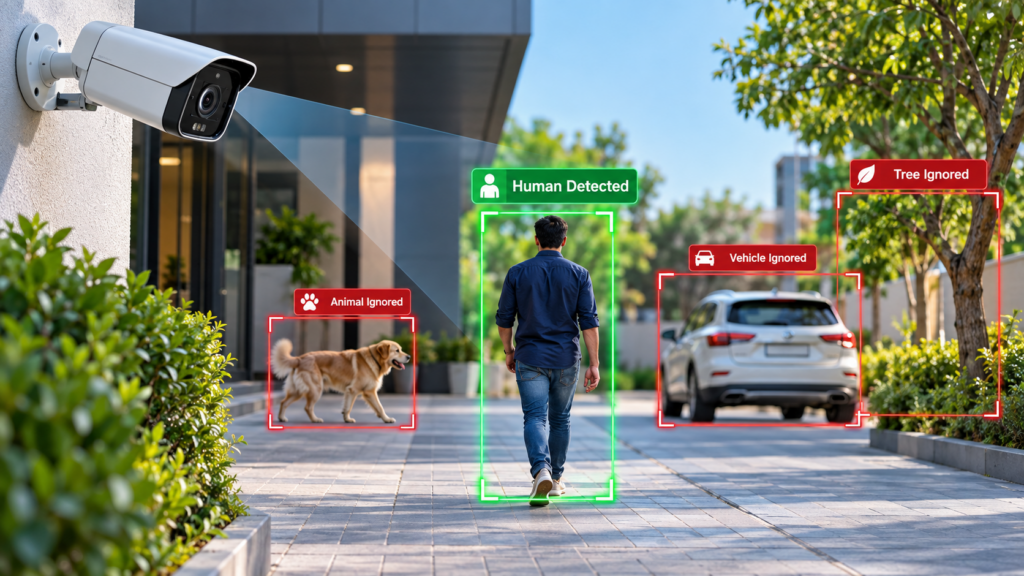
The system analyzes the shape, movement, and visual characteristics of an object and determines whether it is likely to be a human, vehicle, animal, or another object.
For example:
👤 A person entering a restricted area → Human detected
🚗 A car passing the camera → Vehicle detected
🐕 A dog walking through the area → Usually ignored as a non-human object
🌳 Tree branches moving → Usually ignored
📦 An object moving due to wind → Usually ignored
This helps security systems focus on events that are more relevant to the user.
How Does AI Human Detection Work?
AI human detection generally works through a combination of camera sensors, image processing, AI algorithms, and object recognition technology.
The basic process can be understood in four steps.
1. The CCTV Camera Captures Video
The camera continuously captures video from the monitored area. Depending on the camera model, the footage may be available in different resolutions such as 2MP, 4MP, 5MP, or 8MP.
Higher-quality footage can provide more visual detail for identification and monitoring.
2. AI Analyzes the Scene
The camera or connected recorder processes the video using AI-based algorithms.
The system looks for visual patterns associated with different objects.
3. The System Identifies a Human
When the AI determines that an object is a person, it can classify the object as a human.
Some advanced systems can also identify other categories, such as vehicles.
4. An Alert Can Be Triggered
Depending on the CCTV system configuration, the detection can trigger an event such as:
Mobile notification
Alarm
Recording
Push notification
Email alert
Integration with other security systems
This allows users to pay attention to potentially important events instead of reviewing hours of unnecessary footage.
AI Human Detection vs Traditional Motion Detection
One of the biggest advantages of AI human detection is the difference between motion detection and object detection.
Feature
Traditional Motion Detection
AI Human Detection
Detects movement
Yes
Yes
Identifies humans
Generally no
Yes
Can distinguish vehicles
Limited
Often yes
Reduces irrelevant alerts
Limited
Better
Uses AI algorithms
Usually no
Yes
Suitable for smart surveillance
Limited
Yes
Traditional motion detection answers:
“Did something move?”
AI human detection attempts to answer:
“Was the moving object a person?”
This distinction can make a significant difference in practical security monitoring.
Benefits of AI Human Detection in CCTV
1. Reduces False Alerts
Traditional motion detection can generate alerts for many types of movement.
AI human detection can filter many non-human events, helping reduce unnecessary notifications.
2. Faster Security Monitoring
Security personnel do not always have time to watch every camera continuously.
AI-based detection can highlight events involving people so operators can investigate them more quickly.
3. Better Perimeter Security
AI human detection can be useful around:
Gates
Compound walls
Entrances
Parking areas
Warehouses
Construction sites
Restricted zones
If a person enters a defined area, the system can generate an alert depending on the configured rules.
4. Useful for Homes and Businesses
AI CCTV technology can be used in both residential and commercial environments.
For homes, it can help monitor entrances, driveways, and outdoor areas.
For businesses, it can help monitor offices, shops, warehouses, factories, and other restricted areas.
5. Supports Smart Security Systems
AI human detection can work alongside other smart security features, including:
Intrusion detection
Line crossing detection
Area monitoring
Vehicle detection
Face detection
People counting
The availability of these features depends on the specific CCTV camera or recorder.
Where Can AI Human Detection Be Used?
AI-powered CCTV can be useful in many environments.
Homes
Homeowners can use AI CCTV to monitor:
Main entrances
Back entrances
Driveways
Gardens
Parking areas
Shops and Retail Stores
Retail businesses can monitor customer and staff movement while also receiving alerts for activity in restricted areas.
Offices
AI CCTV can help monitor entrances, server rooms, storage areas, and other restricted locations.
Warehouses
Warehouses often contain large areas that require continuous monitoring. AI-based human detection can help identify people entering designated zones.
Factories
Manufacturing facilities can use intelligent CCTV systems for monitoring entrances, restricted areas, and premises.
Apartments and Residential Communities
Apartment communities can use AI-enabled CCTV cameras around gates, parking areas, entrances, and common spaces.
What Is the Difference Between AI Human Detection and Face Recognition?
These two technologies are often confused, but they perform different functions.
AI human detection identifies whether an object in the scene is a person.
Face recognition is designed to analyze facial characteristics and, depending on the system, compare them against stored identities.
For example:
Human Detection: “A person is present near the entrance.”
Face Recognition: “The detected face matches a stored profile.”
Therefore, human detection does not necessarily mean that the CCTV system knows who the person is.
Does AI Human Detection Record Video?
AI human detection itself is a detection feature. Whether video is recorded depends on the CCTV camera, DVR/NVR configuration, storage system, and recording settings.
A system can potentially be configured to:
Record continuously
Record when motion occurs
Record when a human is detected
Save event-based recordings
The exact options depend on the equipment being used.
Is AI Human Detection Better Than Motion Detection?
AI human detection and traditional motion detection serve different purposes.
Motion detection can be useful when you want to know whenever there is movement in an area.
AI human detection is particularly useful when the priority is identifying people and reducing alerts caused by irrelevant movement.
For many modern security applications, AI-based detection can provide more targeted monitoring. However, the actual performance depends on camera quality, installation, lighting conditions, AI capabilities, and configuration.
Factors That Affect AI Human Detection Accuracy
AI detection is not completely independent of the environment. Several factors can affect performance:
Camera Position
A properly positioned camera can provide a clearer view of the monitored area.
Lighting Conditions
Very low light, glare, strong backlighting, or sudden changes in illumination can affect detection performance.
Image Quality
Higher-quality cameras can provide more visual information for analysis.
Distance
If a person is very far from the camera, there may be insufficient visual detail for reliable detection.
Obstructions
Walls, vehicles, trees, and other objects can partially block a person’s body and affect detection.
AI Technology
Different CCTV brands and models use different AI technologies, so performance and available features can vary.
How to Choose an AI CCTV Camera
If you are considering an AI-enabled CCTV system, don’t look only at the camera’s megapixel rating.
Consider:
Resolution
Night vision capability
AI human detection
Vehicle detection
Detection range
Field of view
Storage requirements
Weather protection for outdoor installation
Mobile monitoring
NVR compatibility
Alarm integration
Installation requirements
A professional CCTV installer can help determine the appropriate camera type and placement based on the property layout.
Frequently Asked Questions
Is AI human detection available in all CCTV cameras?
No. AI human detection is generally available only in CCTV cameras or recorders that support the relevant AI-based detection features.
Does AI human detection identify a person’s face?
Not necessarily. Human detection identifies a person as a human object. Face recognition is a separate technology.
Can AI human detection work at night?
Many modern CCTV systems support AI detection during nighttime, but performance depends on the camera’s night-vision technology, lighting conditions, distance, and model.
Can AI CCTV send alerts to a mobile phone?
Many modern CCTV systems support mobile notifications through their associated apps, provided the system and network are configured correctly.
Can AI human detection reduce false alarms?
It can help reduce alerts caused by many non-human movements, but it cannot guarantee that every false alarm will be eliminated.
Conclusion
AI human detection is an important feature in modern CCTV surveillance. Instead of simply detecting movement, AI-enabled systems can analyze video and identify whether the detected object is a person.
This can help reduce unnecessary alerts, improve monitoring efficiency, and provide more intelligent security for homes, offices, shops, warehouses, factories, and other properties.
If you’re planning to install a new CCTV system or upgrade an existing setup, choosing cameras with appropriate AI detection capabilities can be an important part of building a smarter and more efficient security solution.
Looking for AI CCTV and smart security solutions?
Explore CCTV cameras, AI surveillance, home automation, access control, video door phones, digital door locks, and other security solutions from Sentta Technologies.
Choosing the right recording system is an important part of installing a CCTV security system. The two common options are DVR (Digital Video Recorder) and NVR (Network Video Recorder).
Both record CCTV footage, but they work with different camera technologies and cabling systems.
What Is a DVR?
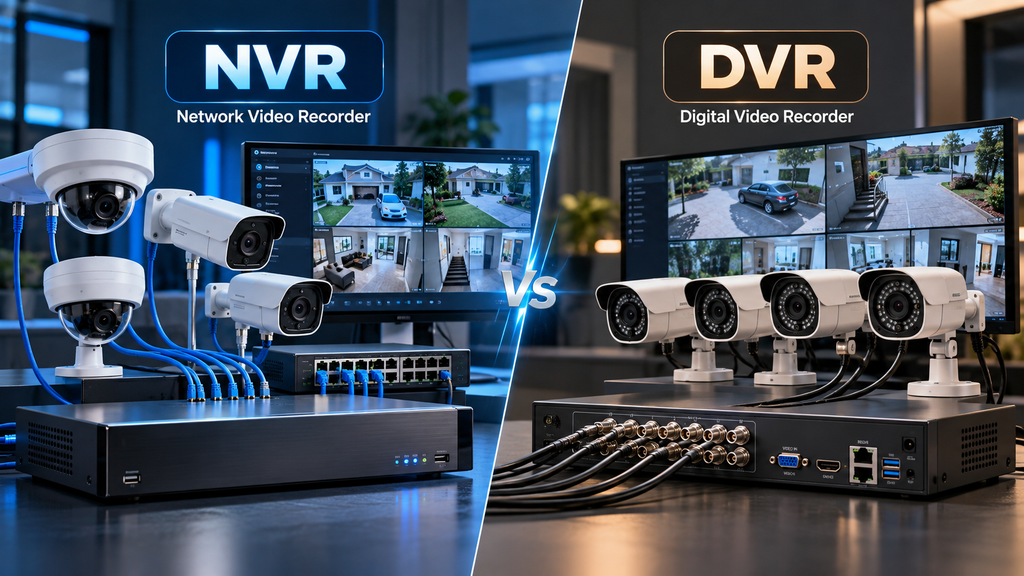
A DVR (Digital Video Recorder) is mainly used with analog or HD-over-coax CCTV cameras. The cameras are connected to the DVR using coaxial cables, and the DVR processes and stores the recorded footage.
Benefits of DVR
Suitable for existing coaxial CCTV systems
Reliable for homes, shops and offices
Simple and familiar installation
Available in different channel options
Can support remote viewing on compatible models
What Is an NVR?
An NVR (Network Video Recorder) is mainly designed for IP CCTV cameras. IP cameras send digital video through a network connection to the NVR.
Benefits of NVR
Supports IP CCTV cameras
High-resolution video options
PoE models can provide power and data through one Ethernet cable
Supports network-based installation
Compatible systems can offer smart detection and analytics
Suitable for new CCTV installations and future expansion
NVR vs DVR: Main Differences
Feature
DVR
NVR
Camera Type
Analog / HD-over-coax
IP cameras
Connection
Coaxial cable
Ethernet/network cable
Video
Digital recording from analog-type cameras
Digital network video
PoE
Usually requires separate setup
Available on PoE NVRs
Expansion
Depends on recorder and cabling
Flexible for network-based systems
Best For
Existing coaxial CCTV
New IP CCTV systems
Which One Should You Choose?
A DVR can be a practical option if your property already has coaxial CCTV wiring and you want to upgrade or replace the recorder.
An NVR can be suitable for a new IP CCTV installation where you need high-resolution cameras, PoE connectivity, network access or compatible smart-security features.
The right choice depends on your property, camera requirements, wiring, storage needs and future expansion plans.
NVR vs DVR for Home Security
For homes, both NVR and DVR systems can provide effective CCTV surveillance.
Choose DVR when you already have compatible coaxial cabling. Choose NVR when you are planning a new IP-camera installation or want a network-based CCTV system.
NVR vs DVR for Offices and Businesses
For offices, shops, warehouses and commercial properties, an NVR system can be useful when multiple IP cameras, network connectivity and advanced camera features are required.
DVR systems can also be suitable for businesses with existing coaxial CCTV infrastructure.
CCTV Storage
Both NVR and DVR systems can use hard drives to store recorded footage. Storage requirements depend on:
Number of cameras
Camera resolution
Recording duration
Frame rate
Compression
Continuous or motion recording
Required storage days
Before choosing a recorder, calculate the required storage based on your surveillance needs.
Why Choose Sentta Technologies?
Sentta Technologies provides professional CCTV and security solutions for homes, offices, shops and commercial properties.
Our solutions can include:
CCTV Camera Systems
AI CCTV Cameras
NVR & DVR Systems
Home Automation
Video Door Phones
Digital Door Locks
Gate Automation
Access Control
Intrusion & Fire Alarm Systems
Our team can help you select the right cameras, recorder, storage and installation based on your property’s security requirements.
Related CCTV Guides
Learn more about CCTV security with these related guides:
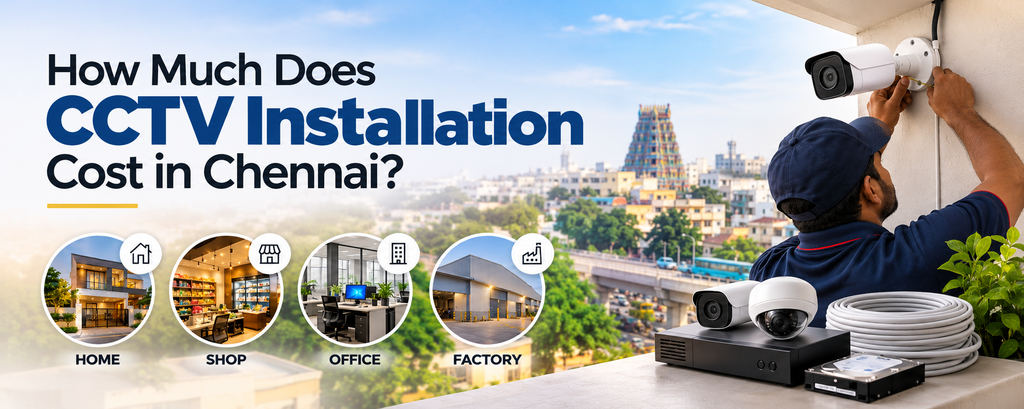
If you are planning to install CCTV cameras for your home, office, shop, apartment, or commercial property, one of the first questions you may have is: How much does CCTV installation cost in Chennai?
The answer depends on several factors, including the number of cameras, camera resolution, CCTV technology, storage capacity, cabling requirements, installation complexity, and additional features such as remote monitoring and AI-based detection.
As a general 2026 market reference, a complete CCTV system in Chennai can start from around ₹6,000–₹12,000 for a basic 2-camera setup, while a 4-camera system may typically cost around ₹15,000–₹30,000. Larger 8-camera systems can range from approximately ₹25,000–₹60,000 or more, depending on the equipment and installation requirements. These are indicative ranges rather than fixed prices.
For an accurate estimate, the property should ideally be assessed before choosing the equipment and installation plan.
Prices are indicative and can vary depending on camera specifications, brand, storage, cabling, property size and installation requirements.
What Determines the Cost of CCTV Installation in Chennai?
CCTV installation is not simply the cost of buying cameras. A complete surveillance system consists of several components.
1. Number of CCTV Cameras
The number of cameras required is one of the biggest factors affecting the total cost.
For example:
A small apartment may need 2–4 cameras.
An independent house may require 4–6 cameras.
A shop or office may require 4–8 cameras.
Warehouses, factories and larger commercial properties may require 8, 16 or more cameras.
The correct number should be determined based on the property’s layout and important areas that need surveillance.
2. Camera Type and Resolution
CCTV cameras are available in different resolutions and technologies.
Common options include:
2MP Full HD cameras
4MP cameras
5MP cameras
4K cameras
IP cameras
Dome cameras
Bullet cameras
PTZ cameras
AI-enabled CCTV cameras
Wi-Fi cameras
Higher-resolution and feature-rich cameras generally cost more but can provide more detailed footage.
For example, a camera used to monitor a cash counter may require different specifications from one used to monitor a large outdoor parking area.
3. DVR or NVR
The recording device is another important part of the CCTV system.
DVR (Digital Video Recorder) is generally used with traditional HD/analog CCTV systems, while NVR (Network Video Recorder) is commonly used with IP cameras.
NVR-based systems can provide features such as:
Higher-resolution recording
Network connectivity
Remote monitoring
PoE support
Scalability
Smart surveillance features
The choice between DVR and NVR depends on your existing infrastructure, camera type and future requirements.
4. Hard Disk and Storage
CCTV cameras continuously generate video footage, so sufficient storage is essential.
The required storage depends on:
Number of cameras
Camera resolution
Recording quality
Continuous or motion-based recording
Number of days you want to retain footage
For example, a home may require a different storage capacity compared with a factory or commercial building that needs longer video retention.
5. Cabling and Installation
Cabling can have a significant impact on the overall CCTV installation cost.
The final price may increase when the property requires:
Long cable runs
Multi-floor wiring
Concealed cabling
Conduits
Difficult camera mounting
Additional networking equipment
PoE switches
Special outdoor installation
Professional installation is important because poorly positioned cameras or exposed wiring can reduce the effectiveness and reliability of the surveillance system.
CCTV Installation Cost for Different Properties
CCTV for Homes
For a typical Chennai home, cameras are commonly installed around areas such as:
Main entrance
Gate
Parking area
Backyard
Staircase
Main common areas
A basic 2-camera setup can start around ₹6,000–₹12,000, while a more comprehensive 4-camera system may fall around ₹15,000–₹30,000 depending on specifications and installation requirements.
For retail businesses, camera positioning is particularly important because the system should provide clear footage of customer movement and important transaction areas.
CCTV for Offices
Office CCTV systems may cover:
Reception
Entry and exit points
Corridors
Work areas
Server rooms
Parking areas
Larger offices may benefit from IP cameras and network-based surveillance systems with centralized recording and remote monitoring.
CCTV for Factories and Warehouses
Industrial properties often require more cameras because of their size.
A factory or warehouse may require:
Outdoor perimeter cameras
Entry gate surveillance
Loading and unloading area monitoring
Storage area cameras
Production floor cameras
Parking surveillance
These projects can require longer cable runs, additional networking infrastructure and higher-capacity storage, which can significantly increase the overall cost.
IP CCTV vs Analog CCTV: Which Costs More?
One of the decisions you may need to make is whether to choose an analog HD system or an IP CCTV system.
Analog CCTV
Generally lower initial cost
Suitable for many homes and small businesses
Can work with existing coaxial infrastructure
Straightforward installation
IP CCTV
Network-based surveillance
Higher resolution options
PoE support
Easier scalability
Advanced analytics and AI features on supported models
Suitable for modern residential and commercial installations
IP systems generally have a higher initial investment, but they can offer greater flexibility and advanced functionality.
What Features Can Increase CCTV Cost?
A basic CCTV camera only records video. Modern surveillance systems can include additional intelligent features.
Depending on the camera and system, you may choose:
AI human detection
Vehicle detection
Motion detection
Intrusion alerts
Perimeter protection
Facial recognition
Night vision
Remote mobile monitoring
Smart playback
Two-way audio
Cloud connectivity
AI-enabled surveillance can be particularly useful for offices, factories, warehouses, apartments and other properties where identifying specific events quickly is important. Sentta Technologies describes AI surveillance solutions that can include human and vehicle detection, intrusion alerts, perimeter protection and remote mobile notifications.
Is CCTV Installation Labour Included in the Price?
This depends on the installer and package.
Some quotations combine:
Cameras
DVR/NVR
Hard disk
Cabling
Power supply
Installation
Configuration
Other quotations may charge separately for installation, additional cable, mounting accessories or networking work.
For this reason, it is important to ask for an itemized CCTV quotation before starting the installation.
Installation-only charges in Chennai can vary depending on the number of cameras and complexity of the work; one Chennai service reference currently lists approximately ₹570–₹1,060 per camera for installation, while more complex projects may require additional charges.
Why a Site Survey Matters Before CCTV Installation
Two properties with the same number of cameras may have completely different installation costs.
A professional site survey helps determine:
Camera locations
Blind spots
Required viewing angles
Cable routes
DVR/NVR location
Storage requirements
Power requirements
Network requirements
Indoor and outdoor camera requirements
This helps avoid installing cameras simply based on the number of rooms or available budget.
How to Choose the Right CCTV System in Chennai
Before purchasing a CCTV system, consider the following:
Identify the Areas That Need Protection
Make a list of critical areas such as entrances, gates, parking, cash counters, storage rooms and outdoor boundaries.
Choose the Right Camera Type
A dome camera may be suitable for indoor areas, while a bullet camera may be more appropriate for certain outdoor locations. Large areas may require PTZ cameras.
Consider Night Vision
If surveillance is required 24/7, check the camera’s low-light and night-vision capabilities.
Check Storage Requirements
Decide how many days of footage you want to retain before selecting the hard disk capacity.
Consider Remote Monitoring
Modern CCTV systems can allow users to view live footage and receive alerts through a mobile application, depending on the system configuration.
Plan for Future Expansion
If you expect to add more cameras later, choose a DVR/NVR and network infrastructure that can support future expansion.
Why Professional CCTV Installation Is Important
Buying a good CCTV camera is only one part of the process.
Professional installation helps ensure:
Correct camera positioning
Proper viewing angles
Secure mounting
Neat cable management
Correct DVR/NVR configuration
Reliable remote access
Proper testing
Reduced blind spots
Sentta Technologies provides CCTV surveillance solutions for residential and commercial requirements, including homes, offices, apartments and industrial properties. The company also lists DVR and NVR-based surveillance solutions and professional installation support.
Why Choose Sentta Technologies for CCTV Installation in Chennai?
Sentta Technologies is a Chennai-based security and technology solutions provider offering CCTV surveillance along with other security and automation solutions. Its listed solutions include CCTV surveillance, video door phones, digital door locks, intrusion alarms, fire alarms, access control and home/office automation.
If you are planning a new CCTV installation or upgrading an existing surveillance system, Sentta Technologies can help you identify a suitable CCTV solution based on your property, security requirements and budget.
Frequently Asked Questions
How much does CCTV installation cost in Chennai?
A basic CCTV installation can start from approximately ₹6,000–₹12,000 for a 2-camera setup. A 4-camera setup may cost around ₹15,000–₹30,000, while larger 8-camera systems can cost ₹25,000–₹60,000 or more. Actual pricing depends on the equipment and installation requirements.
What is the cost of a 4-camera CCTV system in Chennai?
A typical 4-camera CCTV system can cost approximately ₹15,000–₹30,000 including equipment and installation, although the final price depends on camera type, resolution, storage, cabling and other requirements.
Is IP CCTV more expensive than analog CCTV?
Generally, IP CCTV systems have a higher initial cost than basic analog HD systems, but they can provide higher resolution, network connectivity, scalability and advanced features.
How many CCTV cameras do I need for a house?
A small home may need 2–4 cameras, while a larger independent house or villa may require 4–8 cameras depending on the layout and security requirements.
Does CCTV installation include wiring?
It depends on the quotation. Always confirm whether cabling, connectors, conduits, power supplies, installation and configuration are included.
Can I monitor CCTV cameras from my mobile?
Yes. Many modern CCTV systems support remote viewing through mobile applications when the recorder and network are configured correctly.
How long does CCTV installation take?
A standard residential installation can often be completed within a day, while larger commercial and industrial installations may take longer depending on the number of cameras, cabling and site complexity.
Final Thoughts
The cost of CCTV installation in Chennai depends on much more than the price of the cameras. Camera count, resolution, technology, storage, cabling, installation complexity and additional smart features all contribute to the final quotation.
Instead of choosing a CCTV system based only on the lowest price, evaluate the coverage, image quality, storage, reliability, installation quality and after-sales support.
For homes, shops, offices, apartments and industrial properties in Chennai, a properly planned CCTV system can provide continuous surveillance and easier remote monitoring.
If you are planning CCTV installation in Chennai, contact Sentta Technologies to discuss your property requirements and find a suitable surveillance solution.